
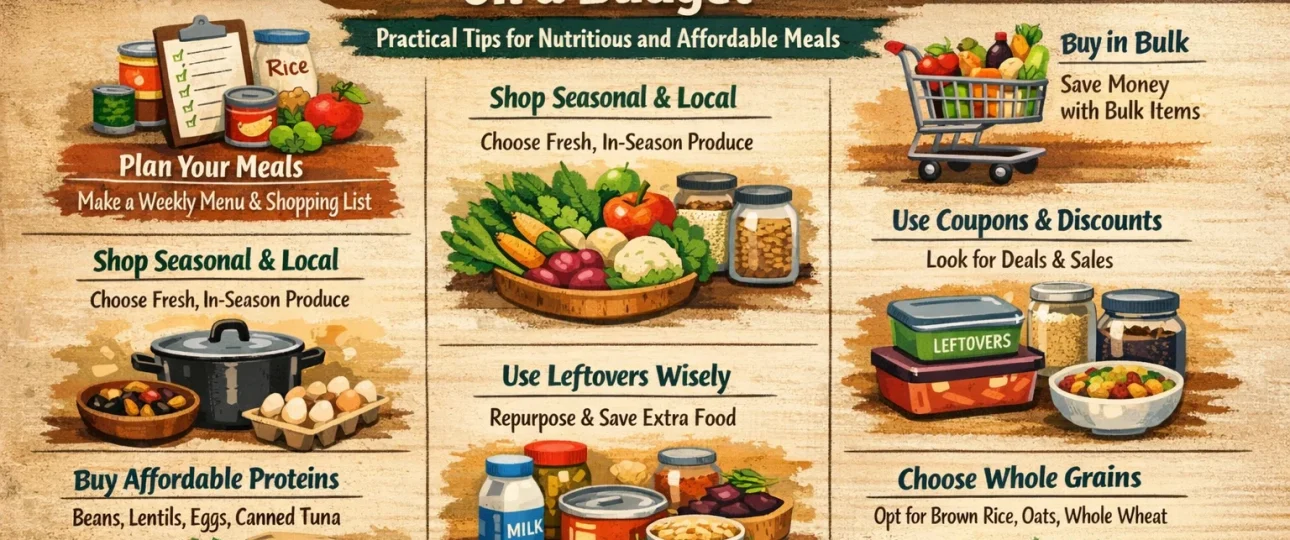
Eating healthy doesn’t have to be expensive. With careful planning, smart shopping, and simple cooking strategies, you can enjoy nutritious meals without overspending. Here’s a guide to help you eat well while staying on budget.
1. Plan Your Meals in Advance
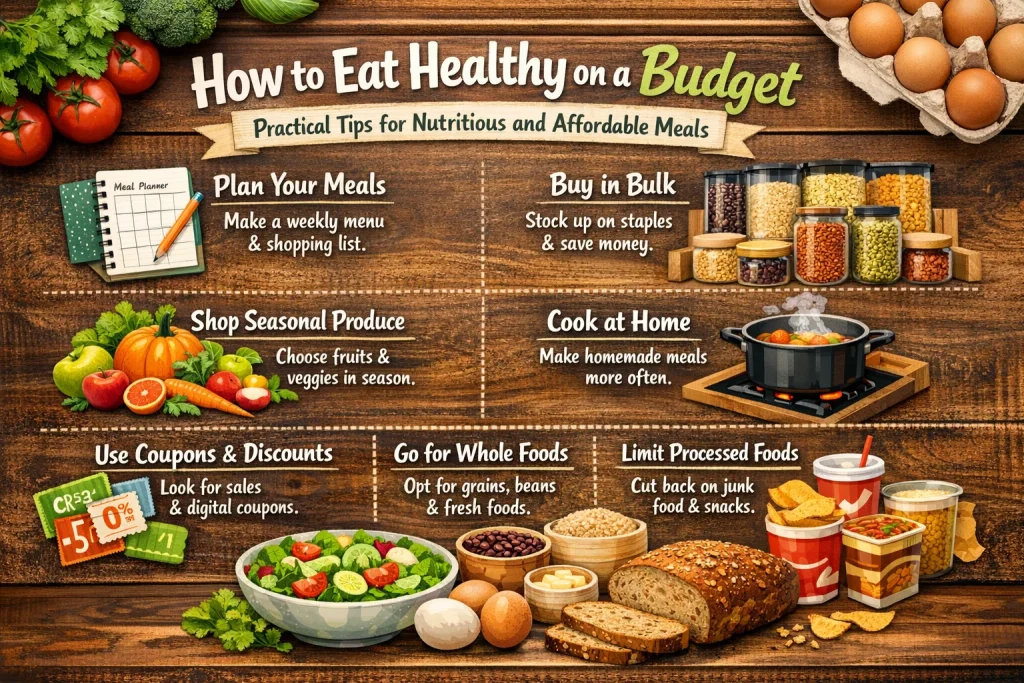
One of the most effective ways to save money while eating healthy is meal planning. By creating a weekly menu:
- You reduce impulse purchases and unnecessary snacks.
- You ensure a balanced diet with proteins, vegetables, fruits, and grains.
- You can make the most of bulk or sale items.
Tip: Choose 1–2 recipes that use overlapping ingredients to avoid waste and save money.
2. Make a Smart Grocery List
Before heading to the store:
- Check your pantry and fridge to avoid buying what you already have.
- Stick to your list to avoid temptation.
- Organize items by category (produce, grains, proteins, etc.) to save time.
3. Buy in Bulk
Buying staples like rice, beans, oats, and lentils in bulk can save money over time. They have a long shelf life and can be used in multiple dishes. Additionally:
- Freeze bulk meat or fish in portions.
- Store grains and legumes in airtight containers to maintain freshness.
4. Focus on Whole Foods
Processed and pre-packaged foods often cost more and are less nutritious. Instead:
- Choose fresh or frozen vegetables and fruits. Frozen options are just as nutritious and last longer.
- Opt for whole grains (brown rice, whole wheat pasta) over refined versions.
- Include budget-friendly proteins such as eggs, beans, lentils, and canned fish.
5. Cook at Home
Preparing your own meals is cheaper and healthier than eating out:
- Try batch cooking, making large portions to last several meals.
- Use simple cooking methods like steaming, roasting, or stir-frying.
- Experiment with inexpensive herbs and spices for flavor instead of pre-made sauces.
6. Shop Seasonally and Locally
- Seasonal produce is cheaper and fresher.
- Farmers’ markets often offer deals near closing time.
- Frozen seasonal fruits and vegetables are a good alternative if fresh is expensive.
7. Limit Food Waste
- Store leftovers properly and eat them within a few days.
- Use vegetable scraps for stocks or soups.
- Plan meals around perishable items first.
8. Choose Budget-Friendly Protein Sources
Protein doesn’t have to be expensive:
- Eggs are versatile and affordable.
- Legumes and beans provide protein and fiber at low cost.
- Canned tuna, sardines, and chicken are economical alternatives.
- Consider plant-based proteins, which can be cheaper than meat.
9. Reduce Sugary Drinks and Snacks
Soft drinks, juices, and packaged snacks can drain your budget. Replace them with:
- Water or homemade infused water
- Homemade snacks like roasted chickpeas, popcorn, or fruit slices
10. Take Advantage of Discounts and Coupons
- Watch for weekly deals at your local grocery stores.
- Use store loyalty programs or cashback apps.
- Compare prices between stores for the best deals.
Final Thoughts
Eating healthy on a budget requires planning, creativity, and smart shopping, but it’s entirely possible. By focusing on whole foods, cooking at home, and buying wisely, you can enjoy a nutritious diet without breaking the bank.
Remember, small changes make a big difference—even modest adjustments in shopping and cooking habits can lead to healthier meals and a healthier wallet.